
RFID Selection for Smart Manufacturing
Manufacturing assessments can start with tooling, reusable carriers or work in progress. Choose a defined workstation, map reading events to production records and test actual production pace, mounting materials and environmental conditions to progressively confirm tags and data capture.
Three steps from requirements to a verifiable solution.
Start by defining the objects to identify, then confirm tags, readers and business data together. Retain verifiable conditions and results at every step so sampling, purchasing and implementation share the same requirements.
Define objects and operating conditions
Describe the materials, available dimensions and attachment of tooling, carriers or work in progress, plus temperature, oil, cleaning and wear. Confirm candidate tags for the equipment and mounting object, verifying environmental requirements individually.
Define workstation and data capture events
Define events such as workstation entry, exit or process completion. Confirm reader positions, target reading areas and triggers. Design mappings between tag identifiers, work orders, carriers and product records.
Validate at the actual production rate
Under actual operating conditions, test target identification, unintended reads of nearby objects and duplicate events. Check interfaces and exception recording. Document equipment settings, installation and results before defining expansion.
Confirm these points before purchasing.
- Provide verifiable descriptions of identification targets, installation materials and environmental requirements.
- Define workstation events, reading boundaries and trigger conditions.
- Verify mappings between tag identifiers, work orders, carriers and product records.
- Include missed reads, unintended reads, duplicate events and exception corrections in validation at the actual production rate.
Record the sample version, equipment settings and test conditions together. Chip, dimensions, quantity, environmental requirements and delivery arrangements depend on the confirmed product solution and quotation.
Discuss your tag requirementsStart with these products.
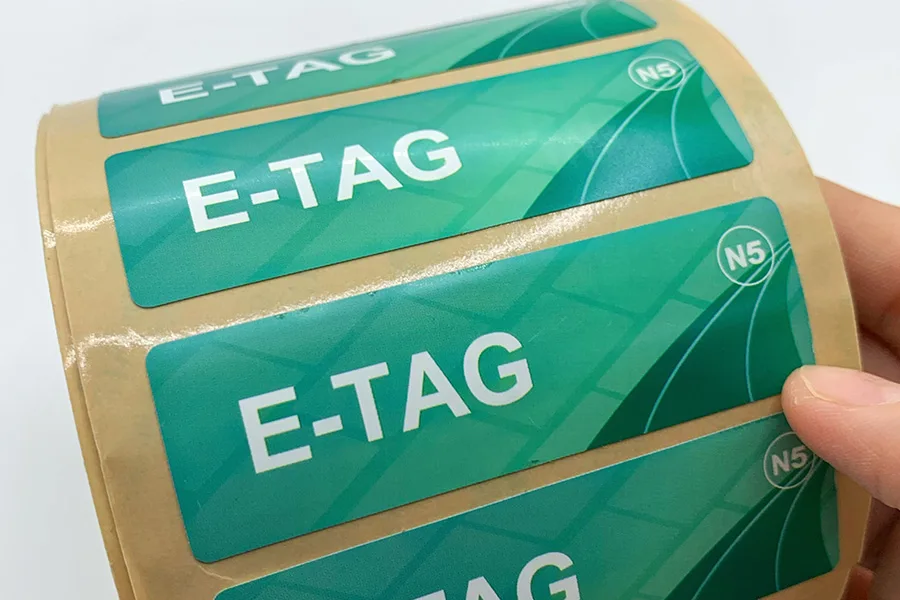
Questions to consider before choosing a tag.
Can the tag connect directly to an existing MES?
Tags identify objects. Sending data into MES also requires readers, interfaces and event rules. Provide the existing system’s interface requirements and sample data to confirm capture, mapping and exception handling.
What requirements do industrial environments place on tags?
Describe mounting materials, temperature, cleaning, oil, wear and service life. Confirm environmental resistance through specific model documentation and appropriate tests before adding it to acceptance requirements.
Bring your application conditions into the selection discussion.
Tell us about the identification targets, readers, operating environment and expected quantity to align the tag solution with the actual workflow.