Distinguish frequency bands and interaction methods
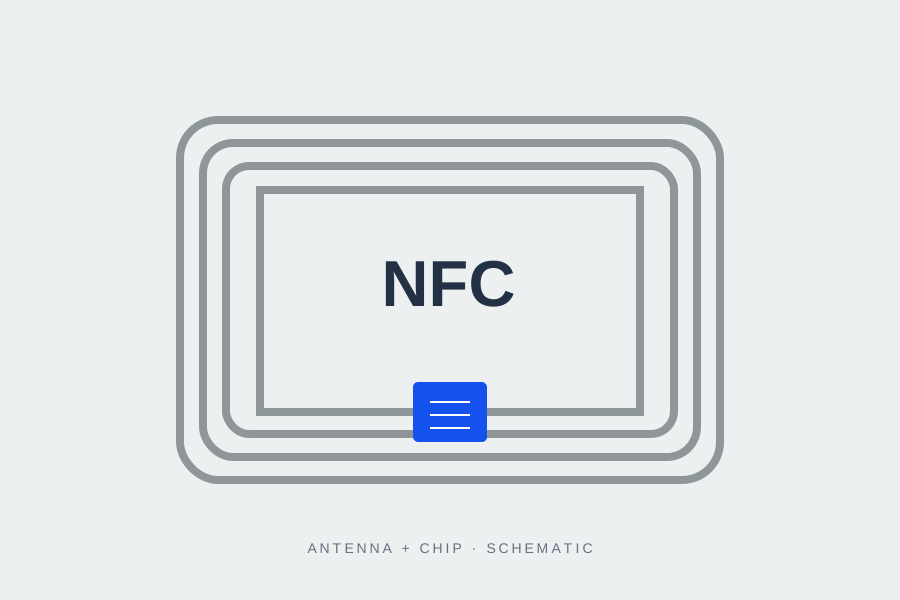
HF is high-frequency RFID, commonly operating at 13.56 MHz. NFC also uses 13.56 MHz for close-range interaction between compatible devices. Shared frequency does not make every HF tag phone-readable; confirm protocol, chip and phone support together.
UHF RFID uses ultra-high frequencies. RAIN RFID is a common passive UHF technology system used for identification, inventory and tracking. NFC and RAIN RFID use different RF technologies; phone NFC support does not imply UHF reading capability.
Match technology choices to actual tasks
For consumer taps, start by evaluating NFC. For close-range individual identification with dedicated readers, assess compatible HF. For inventory of multiple garments or assets, assess UHF. The complete workflow decides, rather than assuming longer range is always better.
- Phone tapping: Define supported smartphones, the webpage or app to open, and the format of written content.
- Close-range identification: Confirm the existing reader’s frequency and protocol, and the data the application needs to read.
- Bulk inventory: Define the target reading area, item quantities, tag positions and how to exclude items outside the area.
Read range is a system result: confirm it together with test conditions
Tag dimensions and antenna, reader, mounting material, orientation and site conditions all affect reading. Compare samples with the same equipment and steps, recording test conditions alongside results.
UHF projects must specify the deployment region and equipment band configuration. A tag’s supported frequency range does not mean a reader can use identical settings in every region. With metal, liquids or dense stacks, first test the tagged items.
Prepare a compatibility checklist before requesting a quote
Sending the business task, existing equipment and operating conditions together helps suppliers narrow the options. Mark unknown parameters as “selection assistance needed” rather than guessing a chip model.
- Business task: Smartphone interaction, identification, asset tracking or bulk inventory.
- Reading equipment: Brand, model and supported protocols; list target smartphones for phone-based use.
- Objects and space: Mounting material, available dimensions, reading position and target distance.
- Data and delivery: Encoded content, printed content, estimated quantity and deployment region.
Sources
Frequently asked questions
Can an NFC-enabled smartphone read UHF tags?
Built-in phone NFC and UHF RFID are different technologies. Ordinary UHF tags usually require dedicated UHF readers. With externally connected readers, confirm compatibility between the equipment, phone and application separately.
Can smartphones read every 13.56 MHz tag?
Frequency alone is insufficient. Confirm tag protocol, chip, data format and target phone support. Test reading with actual phones and samples during selection.
How should the required read range be confirmed?
Describe who reads which item and where, then validate candidate tags, actual readers and mounting materials. An operating area that reliably completes the task is a more useful acceptance goal than maximum range alone.